Connecting Antennas and Remote Equipment in Defense, Cellular, and Satellite Networks
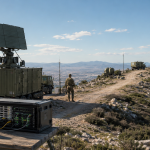
Modern defense, cellular, and satellite systems demand far more flexibility than traditional RF infrastructure can easily support. Antennas are often placed far from control rooms, baseband units, or signal processing equipment-on towers, rooftops, perimeter zones, underground facilities, or remote sites. As distances increase and environments become more challenging, legacy copper-based connections struggle to deliver reliable performance.
This is where RF over Fiber (RFoF) has become a critical enabling technology.
The Challenge of Long-Distance RF Transport
In military bases, cellular networks, and satellite ground stations, antenna placement is driven by coverage, security, and line-of-sight not by proximity to equipment rooms. Coaxial cable, while familiar, introduces several limitations:
• Significant signal loss over distance
• Increased sensitivity to EMI and lightning
• Heavy, bulky cabling that complicates installation
• Limited scalability as frequency demands grow
For high-frequency, multi-band, or mission-critical systems, these issues can directly impact performance and reliability.
Why RF over Fiber Is Gaining Ground
RF over Fiber solutions transport RF signals by converting them to optical signals and sending them over standard fiber optic cable. This approach dramatically improves system design flexibility while preserving RF performance.
Key advantages include:
- Near-zero attenuation over long distances
- Complete immunity to electromagnetic interference
- Lightweight, compact cabling ideal for dense or remote deployments
- Wide frequency support, from IF to microwave and beyond
These benefits make RFoF especially well suited for defense, cellular, and satellite environments where signal integrity and uptime are critical.
Industry-Specific Applications
Defense and Secure Installations
Military and government systems often require physical separation between antennas and sensitive equipment for security and survivability. RFoF applications enable antennas to be deployed at optimal locations-perimeters, masts, or hardened zones while keeping processing equipment safely centralized. Fiber also reduces the risk of interception and interference.
Cellular and Private Wireless Networks
Modern cellular deployments, including DAS, small cells, and private LTE/5G networks, rely on centralized baseband architectures with distributed radio points. RF over Fiber solutions simplify these designs by enabling long, clean RF links without performance degradation, even across large campuses or urban environments.
Satellite Ground Stations
Satellite communication systems depend on precise, low-noise RF transport between antennas and indoor equipment. Fiber-based RF links maintain signal fidelity across wide bandwidths, making RF over Fiber products ideal for connecting remote antennas, tracking systems, and teleport infrastructure.
Simplifying Infrastructure While Preserving Performance
One of the biggest advantages of RF over Fiber is infrastructure simplification. By replacing long coax runs with fiber, organizations can:
- Reduce the need for amplifiers and repeaters
- Lower maintenance and lifecycle costs
- Improve system reliability in harsh environments
- Future-proof networks as frequency requirements evolve
For mission-critical systems, fewer components in the RF path mean fewer points of failure.
A Proven Path Forward
As defense, cellular, and satellite networks continue to expand in scale and complexity, the limitations of traditional RF cabling become harder to ignore. RF over Fiber solutions provide a mature, field-proven way to extend RF signals over long distances without compromising quality.
With a growing ecosystem of specialized RF over Fiber products, RFoF is no longer a niche technology-it is a strategic tool for building secure, scalable, and high-performance wireless infrastructure.