RF Military and Defense

Customized, rugged RFOF solutions
for secure military connectivity
MIL certified and customized RF housing, remote sensing, power amplification and time distribution solutions
Remote Antenna placement for HF/VHF/UHF Radios
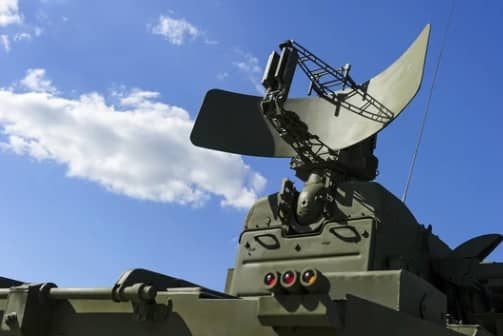
Fixed or mobile Satellite earth stations connecting dishes to the headend equipment
Defence technology

Military and Defense

The Challenge:
To provide secure, lightweight, compact, ruggedized, RF optical connectivity within a harsh military environment.
The Solution:
Global Foxcom’s customized RFOF solutions provide seamless RF connectivity over a single-mode fiber cable to remote satellite or UHF/VHF antennas. These RFOF links operate from DC to 18GHz to cover a wide range of up and down link applications.


Turnkey Benefits of Global Foxcom's Military Solutions

Using FIBER rather than coax cables has multiple advantages
Versatile

Versatile

Combine multiple analogue/digital signals over fiber
Customizable

Customizable

Adapts to customers' specific needs
Limitless

Limitless

Supports solutions for point to point and point to multipoint schemes at any fiber distance
Mil STD Options

Mil STD Options

Ensure system quality and performance requirements are met
High Power

High Power

Support High RF/Optical power for better coverage
Speed

Speed

Support Rapid signal processing and fast RF switching for any RF hopping signal type

Our Technology

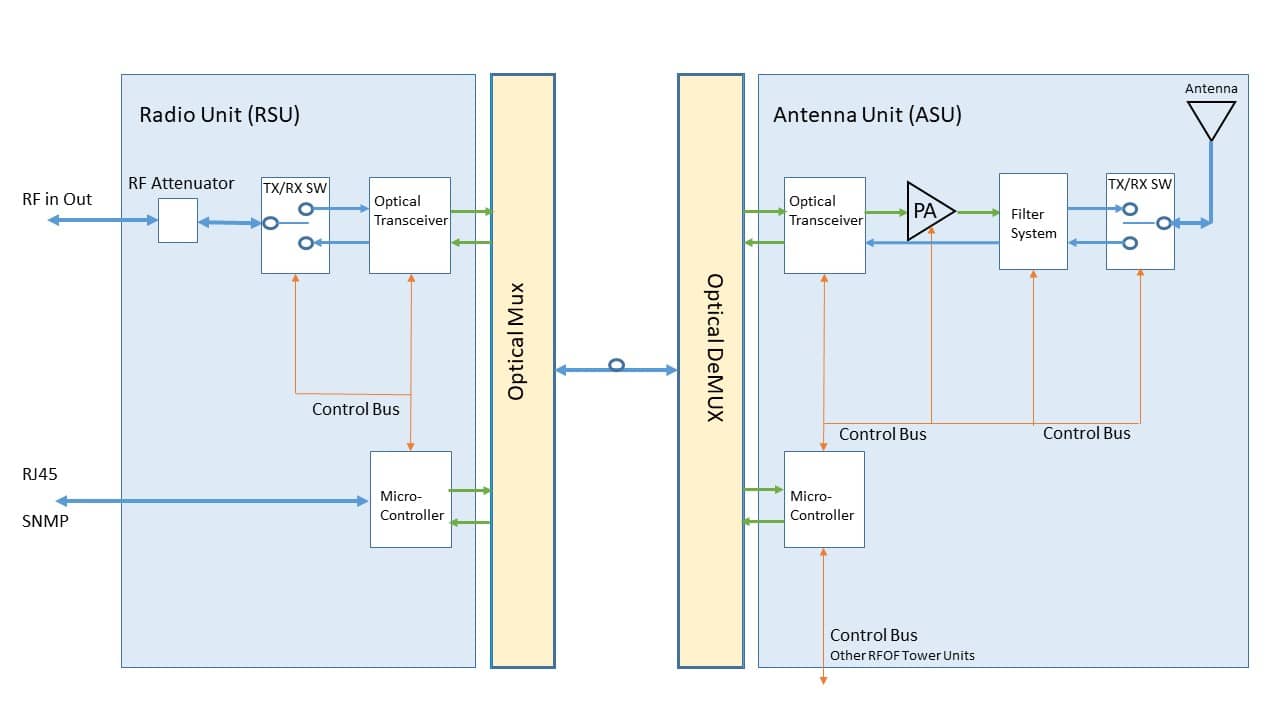
Global Foxcom’s HF/VHF/UHF Remote Antenna Placement technology, Radio Link, uses a standard antenna port on any HF/VHF/UHF radio to transmit encrypted radio signals to remote locations via fiber.

RF Military and Defense Products

Customized Ruggedized RFOF
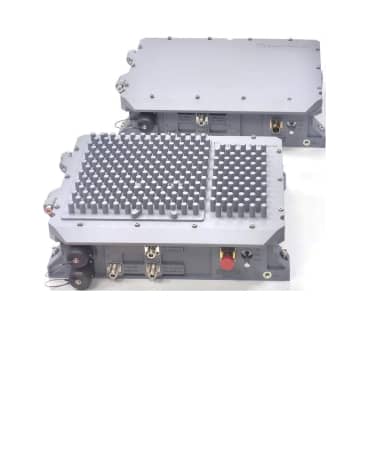
Global Foxcom is a specialized subcontractor to the military industry. In this capacity we consult, design and produce customized electronic equipment that incorporates high power, RF, fiber optics and data capabilities housed in “built-to-spec” Military, Navel and Airborne ruggedized casings. Customized Ruggedized RFOF
Customized Ruggedized RFOF
VHF/UHF Military Radio Links
Global Foxcom’s Military Fiber Optic Radio Links provide a strategic radio transportation solution for remote antenna locations via fiber. The military radio link can be optimized to support remote RF transmit power levels, RF bands and special filtering and UHF military satellite communication. VHF/UHF Military Radio Links
VHF/UHF Military Radio Links

RF Military and Defense FAQs

What are the key RF applications in military operations?

RF technology supports a wide range of critical military functions where secure, stable signal transport is essential. Key applications include:

  • Secure communication systems for voice, data, and mission coordination
  • Radar and surveillance systems for detection, tracking, and monitoring
  • Electronic warfare (EW) for signal intelligence, jamming, and countermeasures
  • Navigation and GPS systems for positioning, timing, and route guidance
  • Missile guidance and defense systems for targeting and interception
  • Unmanned aerial vehicle (UAV) communications for command, control, and data transmission

These applications depend on reliable RF performance in environments where range, signal integrity, and resilience are critical.

What frequency bands are commonly used in military RF applications?

Military RF applications operate across a broad range of frequencies depending on the mission and system type. Commonly used bands include:

  • HF (3-30 MHz) for long-range communication
    VHF (30-300 MHz) for tactical and line-of-sight communication
  • UHF (300 MHz-3 GHz) for tactical radio, satellite communication, and mobile operations
  • L, S, C, X, Ku, and Ka bands for radar, satellite, and advanced communication systems
  • Millimeter-wave (30-300 GHz) for advanced targeting, imaging, and high-resolution sensing

The use of multiple bands reflects the wide range of defense applications that require RF transport, remote antenna placement, and stable connectivity across different platforms.

What are the challenges in RF military applications?

RF military applications face several technical and operational challenges, especially in harsh and mission-critical environments. These include:

  • Signal interference and jamming threats that can disrupt communications and system performance
  • Limited spectrum availability and allocation across different platforms and missions
  • High-power consumption and heat dissipation in demanding RF systems
  • Adapting to evolving electronic warfare threats and changing battlefield conditions
  • Ensuring compatibility and interoperability of systems across different equipment types and communication networks

In addition to these challenges, military RF systems must often meet strict performance, durability, and environmental requirements while supporting secure and reliable operation.

What advancements are shaping the future of military RF technology?

Several developments are influencing the future of military RF technology, with a strong focus on speed, security, mobility, and system performance. These include:

  • AI-driven RF signal analysis and threat detection for faster decision-making and response
  • 5G and beyond for high-speed, secure military communication
  • Miniaturization of RF components for lighter and more portable systems
  • Quantum communication for highly secure data transmission
  • Directed energy weapons using high-power RF pulses for emerging defense capabilities

At the same time, there is growing demand for ruggedized RF solutions that support high power, rapid signal processing, fast RF switching, and reliable transport over fiber in fixed, mobile, naval, and airborne environments.


How are RF over fiber solutions used in military environments?

RF over fiber solutions transmit RF signals between equipment and remote antennas over optical fiber. This enables low-loss, low-latency signal transport over long distances, supporting secure and reliable communication in harsh, distributed, and mission-critical military environments.


Why is fiber preferred over coax in military RF applications?

Fiber supports significantly longer transmission distances with low attenuation and is immune to electromagnetic interference (EMI) and radio frequency interference (RFI). It also reduces cable weight and bulk compared to coaxial systems, making it well suited for mobile, airborne, and rugged deployments.


How are multiple antennas connected over RF over fiber, and when is point-to-point vs point-to-multipoint used?

Multiple antennas can be connected using point-to-point or point-to-multipoint RF over fiber architectures. Point-to-point is typically used for dedicated links between a single RF source and antenna, while point-to-multipoint enables distribution of signals from a central RF system to multiple remote antenna locations. The number of antenna sites, transmission distance, signal distribution requirements, and overall site layout would determine whether point-to-point vs point-to-multipoint is used.