
VSAT Solutions for Maritime Applications
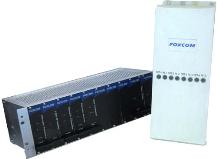
The maritime VSAT solution uses fiber to connect the radome to equipment below deck, replacing long coaxial runs that are difficult to route and maintain at sea. It pairs a 4000 Series outdoor unit with a 7000 Series indoor chassis and is designed for new vessel installations and retrofit projects where reliability and service access are priorities.
Features & Benefits
- Bidirectional L Band transport 950 to 2150 MHz
- Dedicated 10 MHz reference feed for the BUC
- Two RS 422 control channels for antenna interface from the rack
- IP67 outdoor enclosure with conformal coated internals
- Lower RF loss than long coax with improved lightning, EMI, and RFI resilience
- 7000 Series indoor chassis for rack integration
- Optional LNB power at 13 V or 18 V, current limited
- FC APC terminations on single mode fiber at 1310 nm
- Engineered fiber span up to 1 km within budget
- Suitable for ships, yachts, and offshore platforms with TVRO at sea support
This architecture is intended for marine environments where space constraints, weather exposure, and service access are critical factors. The outdoor unit installs within the radome, while the indoor chassis remains below deck and terminates the fiber at the rack. This separation allows integration into existing modem and BUC signal paths without modification to surrounding RF infrastructure. Using fiber between the radome and equipment room helps reduce interference and avoids grounding challenges commonly associated with long coaxial runs on vessels. The layout supports predictable performance and aligns with safe installation practices for shipboard VSAT networks.
Basic Details
| RF Specification | Value |
| Frequency Range – Bandwidth | 950 – 2150MHz |
| Noise Figure | 22dB |
| Input Signal Range – Total Power | -20 to -3dBm |
| RF Output Signal Range – Total Power | -20 to +5dBm (±10dB Adjustable) |
| Optical Specifications | |
| Optical Budget / Distance 1310nm 1550nm | 3dB |
What signals are transported?
Bidirectional L Band is supported, and a 10 MHz reference feed is provided for the BUC between the radome and rack equipment.
How is the stabilized antenna interfaced from below deck?
Two RS 422 serial channels provide control between below deck systems and the antenna inside the radome.
What environmental protection does the outdoor unit have?
The outdoor enclosure is rated IP67, and internal assemblies are conformal-coated to support marine operating conditions.
What fiber type and reach are typical?
Single mode fiber with FC/APC terminations operating at 1310 nm is used. Engineered fiber spans of up to 1 km are supported within the available optical budget, depending on total path loss.
Does the platform provide power on RF ports?
LNB power is available at 13 V or 18 V with current limiting. BUC power is not supplied over the uplink RF connector.