Beyond the Concrete: Key Considerations for Deploying Indoor Iridium Systems
In the world of mission-critical communication, the Iridium satellite network is the gold standard for global coverage. However, for engineers and facility managers, the “global” nature of the network ends at the building’s exterior. Standard L-band signals cannot reliably penetrate concrete, steel, and low-E glass, creating “dead zones” in the very places-command centers, bunkers, and hangars-where connectivity is needed most.
Deploying an indoor Iridium communication system isn’t just about plugging in a device; it requires a structured approach to signal extension. Here is how to plan a deployment that ensures seamless connectivity from the sky to the desk.
Why Indoor Iridium Requires a Structured Setup
Unlike Wi-Fi, which generates a signal locally, an Iridium indoor repeater acts as a bridge. It captures a live signal from a constellation of 66 cross-linked satellites and retransmits it into a shielded environment.
A “plug-and-play” mindset often leads to failure because Iridium is a low-latency, two-way communication protocol. If the link budget is poorly calculated or the antenna placement is suboptimal, the system will suffer from dropped packets or “searching for network” errors, rendering the deployment useless during an emergency.
Practical Considerations for a Successful Deployment
1. Strategic Antenna Positioning
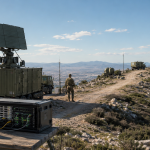
The outdoor antenna is the lifeblood of your system. To maintain a consistent link with the Iridium constellation, the antenna must have a clear 360-degree view of the horizon.
- Avoid Obstructions: Placing an antenna near HVAC units or higher parapet walls can cause periodic signal loss as satellites pass behind these objects.
- Mounting Stability: Given the precision required, mounts must withstand high winds to prevent signal oscillation.
2. Signal Routing and Link Budget
The distance between your outdoor antenna and the indoor repeater unit is a critical variable.
- Cable Loss: L-band signals degrade over long coaxial runs. Engineers must account for the decibel (dB) loss per meter.
- Amplification: For longer runs, inline amplifiers may be necessary to ensure the signal arriving at the Iridium repeater solutions is strong enough to be broadcast effectively.
3. Defining Coverage Areas
Indoor coverage is rarely “one size fits all.” You must determine if you need a localized “hotspot” (e.g., a single workstation) or wide-area coverage for an entire floor.
- Internal Antennas: Passive or active internal antennas must be placed to minimize multipath interference and maximize the “cone of coverage” within the room.
4. Regulatory and Interference Awareness
Repeater systems must be deployed with an understanding of local RF regulations. Because you are re-transmitting licensed satellite frequencies, using high-quality, filtered equipment is essential to avoid interfering with other local wireless networks or neighboring facilities.
Positioned for Scalability: The Repeater Strategy
An Iridium communication system should be viewed as modular infrastructure. A well-planned deployment starts with a single repeater kit but accounts for future growth. By using splitters and multiple internal antennas, a single outdoor link can eventually support multiple indoor zones, providing a scalable path for growing operations.
Frequently Asked Questions
How long does a typical deployment take?
For a standard facility, a basic installation can be completed in a single day. However, large-scale deployments involving complex cable runs and multiple indoor zones typically require 2–4 days for installation and signal testing.
Is the system scalable if we add more handsets?
Yes. Unlike cellular boosters that may have user limits, an Iridium repeater re-broadcasts the satellite signal to the room. Multiple handsets or data units can operate simultaneously within the coverage zone, provided they have a line of sight to the internal antenna.
Can these systems handle Iridium Certus® data?
While standard repeaters are optimized for voice and low-speed data (SBD), high-bandwidth deployments like Certus require specific high-gain equipment and specialized cabling to handle the increased data rates.