Monthly Archives: April 2026

How RF over Fiber Enables Secure Remote Antenna Placement in Defense Facilities

How RF Over Fiber Enables Secure Remote Antenna Placement in Defense Facilities

The Hidden Risk in Traditional RF Architecture

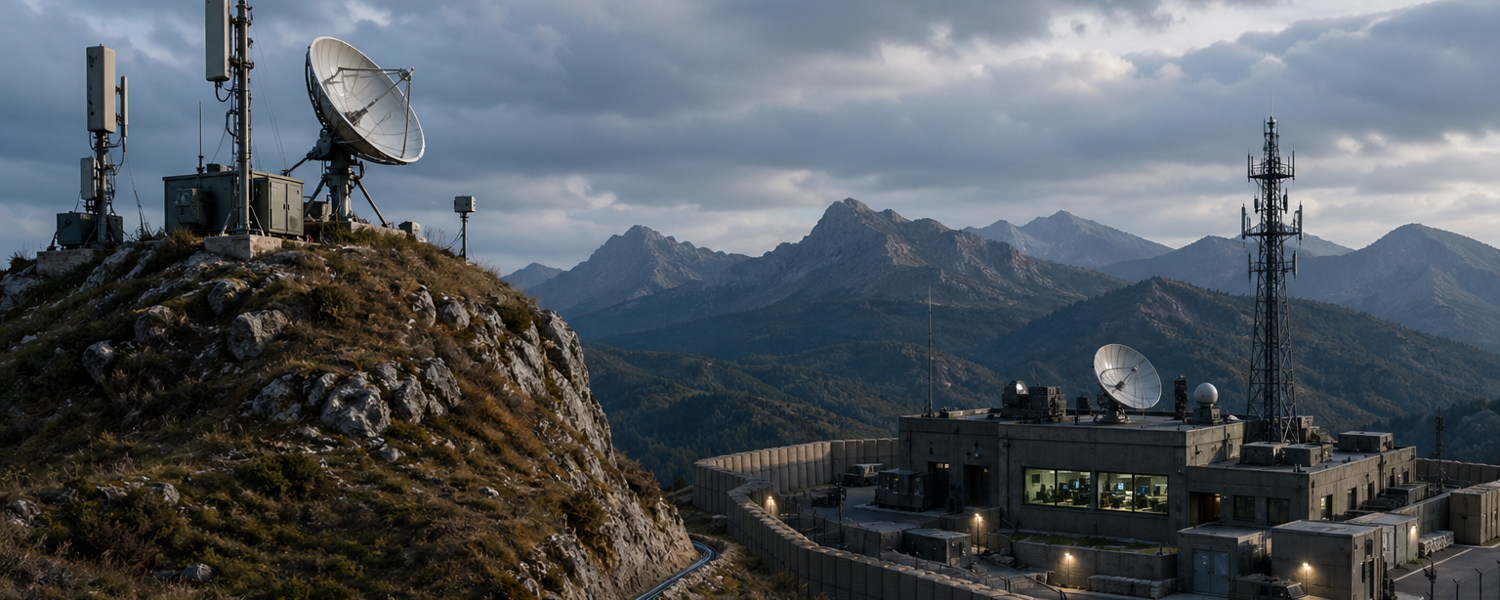
In many military communication systems, antennas are installed directly above or adjacent to core communication rooms. While this simplifies deployment, it creates a critical vulnerability.

Coaxial cable runs tie exposed antenna infrastructure directly to sensitive equipment-modems, encryption units, and control systems. This tight coupling increases the risk of:

  • Physical targeting
  • Signal interception
  • Electromagnetic leakage

In modern RF military and defense environments, this architecture is increasingly seen as outdated.

RF over Fiber: The Foundation of Secure RF Infrastructure

RF over Fiber (RFoF) changes how defense facilities are designed.

Instead of transmitting RF signals over coaxial cables, RFoF converts them into optical signals and transmits them over fiber. This enables antennas to be placed far from core systems-without signal degradation.

More importantly, it enables a secure, distributed architecture that is rapidly becoming standard in advanced defense RF solutions.

1. True Physical Separation of Critical Assets

With RF over Fiber, antennas can be deployed hundreds of meters-or even kilometers-away from sensitive infrastructure.

This creates:

  • Clear physical separation between exposed RF endpoints and secure processing systems
  • Reduced blast or attack impact radius
  • Independent hardening strategies for antenna sites vs. control rooms

Unlike coax, which suffers from signal loss over distance, RFoF maintains signal integrity-making separation practical without compromise.

2. Eliminating RF Signal Leakage Paths

Traditional coaxial cables can act as unintended antennas, leaking signals and increasing interception risk.

RF over Fiber eliminates this problem:

  • Fiber does not radiate electromagnetic signals
  • Signals are contained within the optical domain
  • No exploitable RF leakage along transmission paths

For military RF solutions, this significantly reduces the attack surface for signal intelligence (SIGINT) threats.

3. Strengthening Electromagnetic Security (EMSEC)

EMSEC is a critical requirement in defense communication systems.

By using RF over Fiber, facilities can:

  • Remove RF signals from secure zones entirely
  • Prevent unintended emissions from cabling infrastructure
  • Maintain strict electromagnetic isolation between zones

This makes RFoF a powerful tool for meeting stringent EMSEC standards in high-security environments.

4. Enabling Distributed and Resilient Architectures

RF over Fiber makes it easy to design distributed antenna systems:

  • Multiple remote antenna sites can be connected to a central facility
  • Redundant paths can be established for failover
  • Antennas can be geographically dispersed to reduce single points of failure

This level of flexibility is essential in modern defense RF solutions, where uptime and survivability are mission-critical.

5. Improving Performance While Increasing Security

Unlike many security measures, RF over Fiber enhances performance:

  • Supports wideband and high-frequency signals (including L-band and beyond)
  • Eliminates signal loss associated with long coaxial runs
  • Enables optimal antenna placement for line-of-sight and coverage

This means defense organizations no longer have to choose between performance and protection-RFoF delivers both.

6. Supporting Advanced Military Communication Systems

As military communication systems evolve to support:

  • SATCOM
  • GPS/GNSS distribution
  • Tactical radio networks

The need for flexible, secure RF transport becomes critical.

RF over Fiber provides a unified infrastructure that can support multiple signal types across a single fiber backbone-simplifying deployment while enhancing security.

Design Considerations for RF over Fiber Deployment

To fully leverage RF over Fiber in RF military and defense environments, planners should consider:

  • Secure fiber routing and redundancy
  • Environmental protection of remote antenna units
  • Power availability at remote sites
  • Integration with existing defense communication systems

Properly implemented, RFoF becomes the backbone of a secure RF architecture-not just a transport medium.

RF over Fiber as a Security Strategy

In today’s threat landscape, infrastructure design is a frontline defense.

RF over Fiber enables remote antenna placement that dramatically reduces vulnerability, limits signal exposure, and strengthens electromagnetic security-while simultaneously improving RF performance.

For organizations deploying next-generation military RF solutions and defense communication systems, RFoF is not just an upgrade, it’s a strategic necessity.

Beyond the Concrete: Key Considerations for Deploying Indoor Iridium Systems

Beyond the Concrete Deploying Indoor Iridum Systems

In the world of mission-critical communication, the Iridium satellite network is the gold standard for global coverage. However, for engineers and facility managers, the “global” nature of the network ends at the building’s exterior. Standard L-band signals cannot reliably penetrate concrete, steel, and low-E glass, creating “dead zones” in the very places-command centers, bunkers, and hangars-where connectivity is needed most.

Deploying an indoor Iridium communication system isn’t just about plugging in a device; it requires a structured approach to signal extension. Here is how to plan a deployment that ensures seamless connectivity from the sky to the desk.

Why Indoor Iridium Requires a Structured Setup

Unlike Wi-Fi, which generates a signal locally, an Iridium indoor repeater acts as a bridge. It captures a live signal from a constellation of 66 cross-linked satellites and retransmits it into a shielded environment.

A “plug-and-play” mindset often leads to failure because Iridium is a low-latency, two-way communication protocol. If the link budget is poorly calculated or the antenna placement is suboptimal, the system will suffer from dropped packets or “searching for network” errors, rendering the deployment useless during an emergency.

Practical Considerations for a Successful Deployment

1. Strategic Antenna Positioning

The outdoor antenna is the lifeblood of your system. To maintain a consistent link with the Iridium constellation, the antenna must have a clear 360-degree view of the horizon.

  • Avoid Obstructions: Placing an antenna near HVAC units or higher parapet walls can cause periodic signal loss as satellites pass behind these objects.
  • Mounting Stability: Given the precision required, mounts must withstand high winds to prevent signal oscillation.

2. Signal Routing and Link Budget

The distance between your outdoor antenna and the indoor repeater unit is a critical variable.

  • Cable Loss: L-band signals degrade over long coaxial runs. Engineers must account for the decibel (dB) loss per meter.
  • Amplification: For longer runs, inline amplifiers may be necessary to ensure the signal arriving at the Iridium repeater solutions is strong enough to be broadcast effectively.

3. Defining Coverage Areas

Indoor coverage is rarely “one size fits all.” You must determine if you need a localized “hotspot” (e.g., a single workstation) or wide-area coverage for an entire floor.

  • Internal Antennas: Passive or active internal antennas must be placed to minimize multipath interference and maximize the “cone of coverage” within the room.

4. Regulatory and Interference Awareness

Repeater systems must be deployed with an understanding of local RF regulations. Because you are re-transmitting licensed satellite frequencies, using high-quality, filtered equipment is essential to avoid interfering with other local wireless networks or neighboring facilities.

Positioned for Scalability: The Repeater Strategy

An Iridium communication system should be viewed as modular infrastructure. A well-planned deployment starts with a single repeater kit but accounts for future growth. By using splitters and multiple internal antennas, a single outdoor link can eventually support multiple indoor zones, providing a scalable path for growing operations.

Frequently Asked Questions

How long does a typical deployment take?
For a standard facility, a basic installation can be completed in a single day. However, large-scale deployments involving complex cable runs and multiple indoor zones typically require 2–4 days for installation and signal testing.

Is the system scalable if we add more handsets?
Yes. Unlike cellular boosters that may have user limits, an Iridium repeater re-broadcasts the satellite signal to the room. Multiple handsets or data units can operate simultaneously within the coverage zone, provided they have a line of sight to the internal antenna.

Can these systems handle Iridium Certus® data?
While standard repeaters are optimized for voice and low-speed data (SBD), high-bandwidth deployments like Certus require specific high-gain equipment and specialized cabling to handle the increased data rates.

Indoor GPS Coverage for Large Facilities Using GNSS Repeaters

Indoor GPS Coverage for Large Facilities Using GNSS Repeaters

Learn how to design reliable indoor GPS coverage for large facilities using GPS repeaters, GNSS repeaters, and fiber-based signal distribution solutions.

Designing Indoor GPS Coverage for Large Facilities: Key Considerations

GPS receivers work reliably outdoors, but indoors they often stop working entirely. Aircraft hangars, warehouses, research labs, and underground control rooms frequently require GNSS signals for testing, tracking, or synchronization.

Without a structured solution, such as a GPS repeater or GNSS repeater, satellite signals simply cannot reach these environments. Building materials like concrete, steel, and roofing structures block the already weak signals transmitted by GNSS satellites.

Designing reliable indoor GPS coverage requires careful planning. When deploying an indoor GPS repeater system in a large facility, several practical design considerations help ensure reliable performance.

1. Start With a Facility-Wide Indoor GPS Coverage Plan

In large environments, a GPS signal is rarely required in just one location. Coverage may be needed across multiple operational zones, such as:

  • Aircraft maintenance bays
  • Equipment testing laboratories
  • Warehouse floors
  • Underground control rooms

Identifying where signals are required helps determine how many indoor antennas are needed and how the indoor GPS repeater system should be distributed throughout the facility.

Planning coverage zones early ensures consistent indoor GPS coverage and prevents signal gaps.

2. Receiving High-Quality Satellite Signals Outdoors

Every GPS signal repeater system begins by capturing GNSS signals outdoors.
The outdoor antenna should be installed where it has:

  • A clear view of the sky
  • Minimal surrounding obstructions
  • Low RF interference

Roof-mounted installations are common, particularly when deploying a GPS repeater for hangar environments where receiving reliable satellite signals is essential.

Because the entire GNSS repeater system depends on this signal source, proper antenna placement is critical.

3. Divide the Facility into Coverage Zones

Large buildings typically require multiple indoor antennas to rebroadcast the signal effectively.

Facilities are often divided into coverage zones, such as:

  • Hangar bays
  • Test labs
  • Manufacturing areas
  • Operations rooms

The transmit antenna for each zone receives signals from the indoor GPS repeater, ensuring stable coverage while avoiding excessive overlap between antennas.

This zoning approach helps maintain reliable indoor GPS coverage across large facilities.

4. Select the Right Signal Distribution Method

Once satellite signals are received outdoors, they must be transported indoors without degradation.

Two distribution approaches are commonly used.

  1. Coaxial distribution works well when indoor antennas are located relatively close to the outdoor antenna.
  2. For larger environments, GNSS / GPS fiber solutions enable signals to be transported over long distances while maintaining signal quality. Fiber-based distribution is particularly effective for:
  • Aircraft hangars
  • Large industrial facilities
  • Multi-building campuses
  • Underground installations

Fiber infrastructure also simplifies system expansion.

Signal Distribution Options for Indoor GPS Coverage

Distribution Method Best For Advantages
Coaxial distribution Smaller buildings Simple installation
RF over Fiber Large facilities and long distances Minimal signal loss
GNSS GPS fiber solutions Multi-building or underground environments Scalable and flexible

5. Control Signal Leakage and Interference

A properly designed GPS signal repeater must prevent signals from leaking outside the facility.

Most GNSS repeater systems include controlled amplification and a maximum transmit power, limiting-circuit to ensure signals transmitted indoors are contained within the building.

This protects nearby outdoor receivers and preserves signal integrity for indoor devices.

6. Design for Future Expansion

Large facilities often expand over time. New testing areas, additional operational zones, or new GNSS applications may require expanded coverage.

A scalable indoor GPS repeater architecture enables additional antennas or coverage zones to be added without redesigning the entire system.

Solutions based on GNSS GPS fiber solutions are particularly well suited for facilities expecting future growth. For more information, see https://foxcom.com/product/repeaters/

How a GPS Repeater Enables Indoor GPS Coverage

A GPS repeater receives live satellite signals outdoors and redistributes them indoors through a controlled network of amplifiers and indoor antennas.

This approach enables facilities to maintain real satellite signal availability inside environments where GNSS signals would otherwise be unavailable.

In aviation environments, for example, a GPS repeater for hangar deployment enables avionics testing and maintenance to be performed indoors while still using live satellite signals.

Common Indoor GPS Repeater Applications

Indoor GNSS distribution systems are commonly used in environments where satellite signals cannot penetrate building structures.

Typical applications include:

  • Aircraft hangars – enabling avionics testing using a GPS repeater for hangar environments
  • Large warehouses – supporting GPS-based asset tracking systems
  • Underground control rooms – maintaining GNSS timing and synchronization
  • Research and testing laboratories – validating GPS receivers indoors

These environments rely on carefully designed indoor GPS repeater systems to deliver stable satellite signals throughout the facility.

Frequently Asked Questions

What is an indoor GPS repeater?
An indoor GPS repeater receives GNSS signals outdoors and rebroadcasts them inside a building, enabling GPS receivers to operate in locations where signals would normally be blocked.

How large of an area can a GPS repeater cover?
With proper antenna placement and signal distribution, GPS repeater systems can cover large facilities, such as aircraft hangars, warehouses, and underground complexes.

Can GPS signals be distributed across multiple buildings?
Yes. Using GNSS GPS fiber solutions, satellite signals can be transported over long distances, enabling multiple buildings to share a single outdoor antenna source.

Why are GPS repeaters used in aircraft hangars?
A GPS repeater for hangar environments enables avionics systems to be tested indoors using real satellite signals without moving aircraft outside.

What are the main challenges in indoor GPS deployment?
The most common challenges include signal distribution across large areas, maintaining consistent indoor GPS coverage, and preventing interference with outdoor receivers.

What Limits Iridium Signal Penetration Inside Buildings?

What Limits Iridium Signal Penetration Inside Buildings

Satellite communication is known for its global reach. Iridium communication systems provide reliable connectivity across oceans, deserts, polar regions, and other remote environments. But when those signals need to reach inside buildings, underground facilities, or aircraft hangars, things become more complicated.

Understanding why Iridium signals struggle indoors is the first step toward designing reliable indoor satellite communication solutions.

What is an Iridium Repeater?

An Iridium repeater captures satellite signals outdoors and re-transmits them inside buildings, hangars, or underground facilities. This enables reliable indoor satellite communication where direct satellite visibility is blocked by walls, concrete, metal structures, or building density.

This simple system ensures critical Iridium communication systems remain functional even in signal-challenging environments.

When Iridium Is Needed Indoors

Imagine a maintenance team working inside a large aircraft hangar. They rely on Iridium communication systems to coordinate with operations centers and remote teams. Outside the hangar, satellite connectivity is strong and stable. But once inside the massive steel structure, signal quality quickly drops or disappears entirely.

This scenario is common in environments, such as:

  • Aircraft hangars
  • Underground bunkers
  • Secure facilities
  • Industrial plants
  • Large concrete buildings

Even though the Iridium satellite constellation provides global coverage, the signals themselves must still physically reach the receiving device. Buildings often prevent that from happening.

Why Satellite Signals Struggle to Enter Buildings

Iridium satellites orbit the Earth and transmit signals toward the ground. These signals must travel through the atmosphere and then pass through building materials before reaching an indoor device. Most buildings simply are not designed with satellite signal penetration in mind.

Several practical factors limit indoor reception.

Building Materials That Block Signals

One of the biggest obstacles to indoor satellite communication is the materials used in modern construction.
Common signal-blocking materials include:

  • Reinforced concrete – steel rebar absorbs and reflects RF signals.
  • Metal structures – aircraft hangars, warehouses, and industrial facilities often act as RF shields.
  • Energy-efficient glass – Low-E windows with metallic coatings reduce signal penetration.
  • Thick structural walls – secure or underground facilities may include multiple dense layers.

Even when signals do penetrate, they are often severely weakened before reaching the receiver.

Structure Density and Building Design

Beyond individual materials, the overall density and complexity of a structure also affects signal performance.

Signals entering a building may encounter:

  • Multiple floors and ceilings
  • Structural columns
  • Machinery and equipment
  • Internal metal structures
  • Dense wiring and utilities

Each obstacle reduces signal strength. In large buildings, signals may attenuate long before reaching interior spaces, explaining why devices that work outdoors may fail a few meters inside.

Signal Path Obstruction

Iridium satellites rely on line-of-sight signal paths between the satellite and the receiving antenna. Buildings interrupt that path.

Even partial obstruction can create problems, such as:

  • Intermittent connectivity
  • Signal dropouts
  • Reduced data reliability
  • Failed call attempts

These challenges are particularly noticeable in hangars, underground rooms, and shielded facilities.

Comparison: Signal Availability With and Without Repeater

Environment Natural Signal Availability Reliability
Outdoors Strong satellite visibility High
Near windows Partial signal Unreliable
Inside concrete buildings Very weak signal Poor
Underground facilities No signal None
With an Iridium indoor repeater Full coverage Reliable

This comparison clearly shows why an indoor solution is essential for critical communication.

Long-Tail Applications: Where Iridium Repeater Systems Are Commonly Used

Iridium repeater solutions are widely deployed in environments where satellite signals cannot naturally penetrate the structure, including:

  • Aircraft maintenance hangars
  • Underground command centers
  • Military bunkers
  • Secure government facilities
  • Maritime control rooms
  • Large industrial plants

This section captures searches for terms like Iridium repeater for hangar or indoor satellite communication system.

How Iridium Indoor Repeater Systems Solve the Problem

The most effective way to overcome indoor signal limitations is to bring the satellite signal inside intentionally.

An Iridium repeater works by:

  1. Capturing the satellite signal outdoors using a clear sky-facing antenna
  2. Transporting the signal into the building using coaxial cable or fiber
  3. Re-transmitting the signal inside the structure where users need coverage

These Iridium repeater solutions ensure consistent indoor satellite communication without requiring each device to see the sky directly.

Related Satellite Signal Extension Technologies

In many installations, Iridium repeater systems are combined with other technologies:

  • RF over Fiber solutions for transporting RF signals over long distances
  • GNSS repeater (also known as GPS repeaters) systems for indoor GPS coverage
  • Multi-service satellite repeater systems supporting multiple signals

Adding these solutions ensures critical Iridium communication systems remain reliable even in the most challenging environments.

Enabling Reliable Indoor Satellite Communication

Iridium satellite networks provide exceptional global coverage, but building structures often prevent those signals from reaching indoor users.

By understanding the limitations created by construction materials, structural density, and signal obstruction, organizations can design systems that maintain reliable connectivity where it matters most.

Organizations that rely on Iridium communication systems in aircraft hangars, underground facilities, or secure buildings often deploy Iridium repeater solutions to maintain reliable indoor satellite communication.
Iridium repeater solutions extend satellite signals from the outdoors into controlled indoor environments ensuring that critical Iridium communication systems remain available even inside the most challenging structures. Explore Iridium repeater for more information.

FAQs About Iridium Signals Indoors

Can Iridium phones work inside buildings?
Sometimes but reliability depends heavily on building materials, window placement, and proximity to open sky. Many buildings block signals completely.

Why does Iridium work near windows but not deeper inside?
Windows enable partial signal entry, while walls, floors, and structural materials quickly weaken the signal.

Do Iridium signals penetrate concrete?
Concrete alone reduces signal strength significantly. Reinforced concrete with steel rebar can block signals almost entirely.

What is an Iridium indoor repeater?
An Iridium indoor repeater captures satellite signals outdoors and rebroadcasts them inside a building, enabling reliable indoor satellite communication.

Where are Iridium repeater solutions typically used?
Commonly deployed in aircraft hangars, underground facilities, bunkers, secure buildings, and industrial environments.

Why can’t Iridium signals reach underground rooms?
Satellite signals require a clear path to the sky. Underground structures are completely shielded by soil, concrete, and structural materials.

Can an Iridium repeater support multiple devices indoors?
Yes. An Iridium indoor repeater system can distribute the signal throughout a facility, enabling multiple devices to communicate with the satellite network.